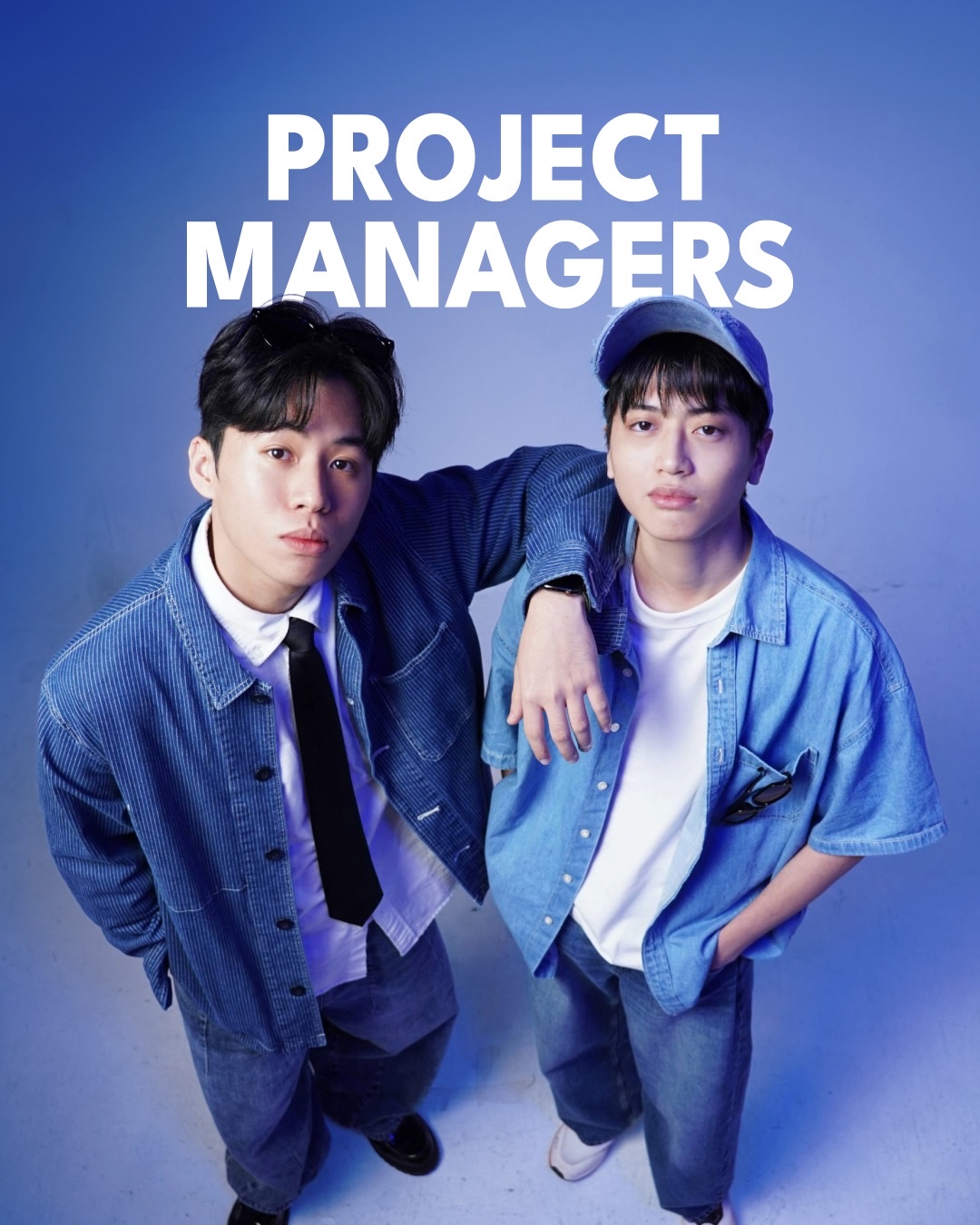
Project Managers
Alistair Ng · Willion Yap
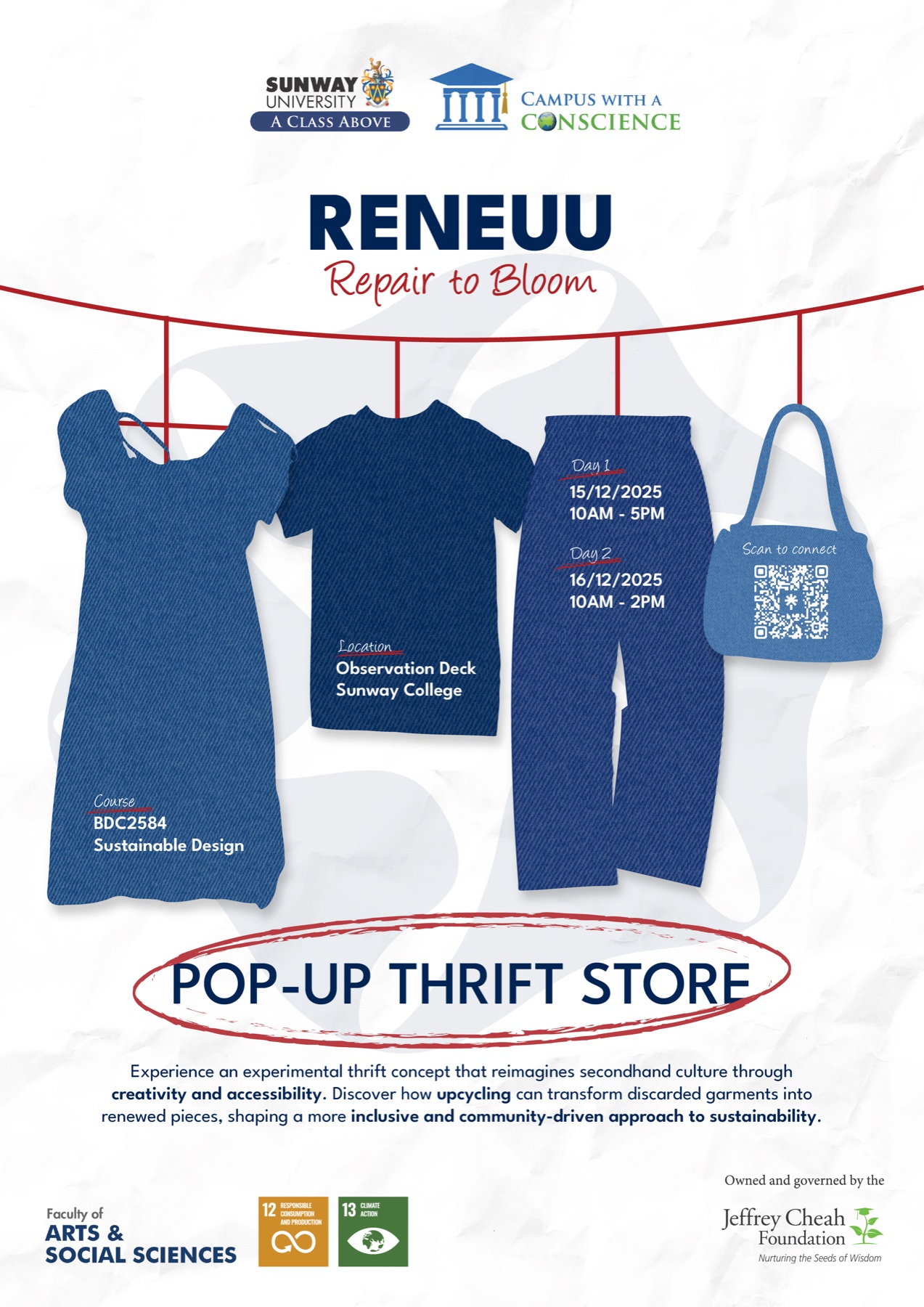
RENEUU is an integrated sustainable-fashion campaign and experimental pop-up thrift store that challenged the commodification of sustainability within thrift culture. Community-donated garments became the raw material for nearly 40 renewed products, a public-facing brand, and an exhibition designed to make repair and transformation feel accessible.
My role
As Project Managers, Willion Yap and I led the full project: aligning departments, managing timelines and finances, facilitating communication, resolving production issues, and keeping every output connected to one direction. Concept development was collaborative, but we made the final calls on how the research, identity, products, campaign, and exhibition linked together.
RENEUU became one of my favourite projects to work on. I had always enjoyed researching and connecting ideas, but leading a group at this scale showed me that I could turn that strength into leadership. Co-managing the project helped me build confidence, communicate more decisively, and guide many different contributions into a result that felt genuinely cohesive.
01 — The starting point
Thrifting can reduce waste, but it can also be repackaged as a fashionable or premium form of consumption. Higher prices and trend-led buying risk making sustainable participation less accessible while repeating the same cycle under a greener label.
RENEUU responded by asking how unwanted clothing could regain value through participation, repair, and creative transformation—not simply through resale.
02 — Repair to bloom
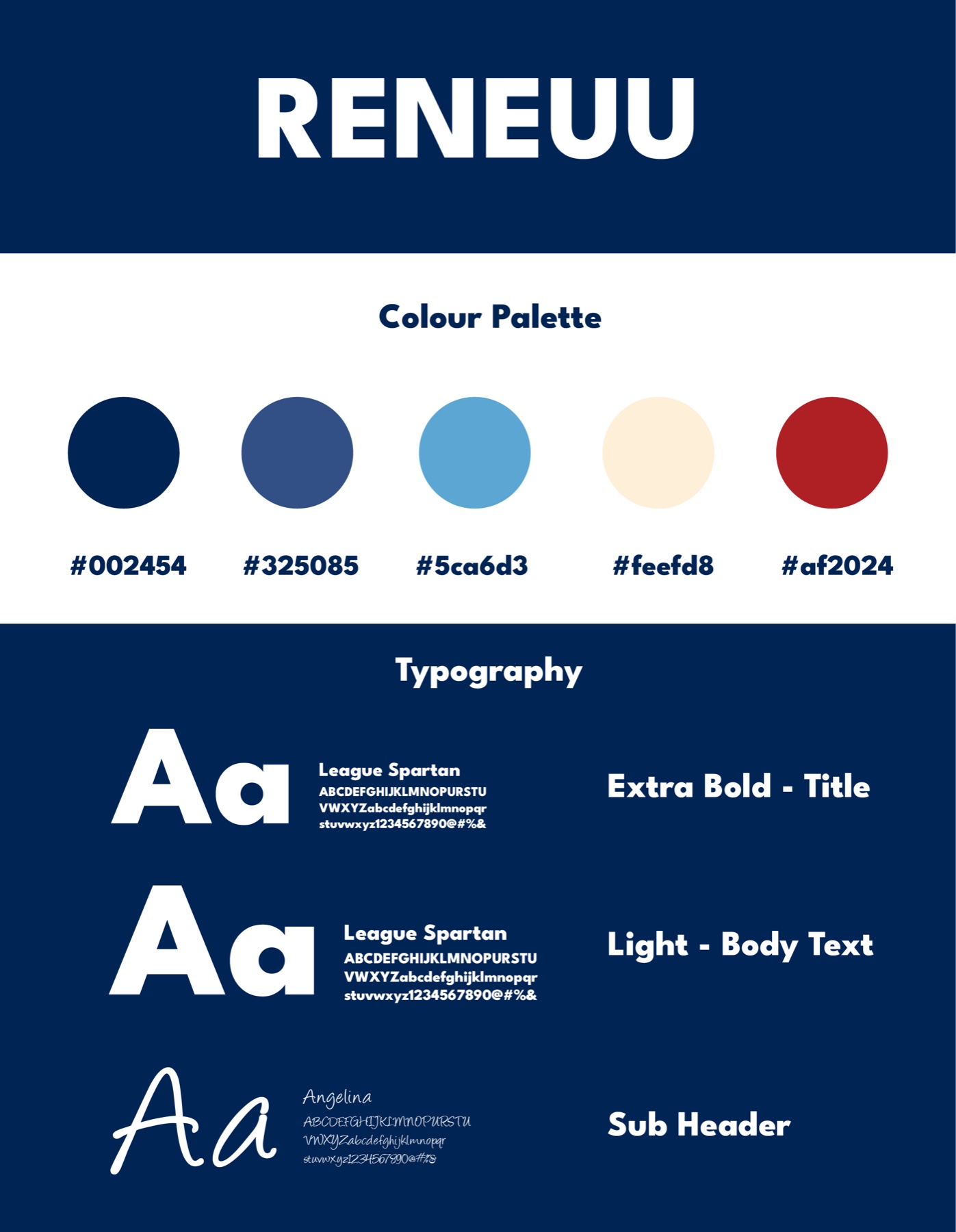
The name RENEUU reframes “renew,” turning its final sound into “double U.” Kintsugi and Wabi-Sabi informed an approach that values traces of age and repair rather than hiding them, while the lotus represented growth from overlooked beginnings.
Together, these references shaped a simple principle: old, imperfect, or discarded materials can be transformed without erasing their history. “Repair to Bloom” describes that act; “Repaired to Bloom” appears as its completed state across selected applications.
03 — Project direction
Four departments developed the project in parallel. Our responsibility as Project Managers was to keep the research, product development, campaign communication, documentation, and physical experience moving toward the same outcome.
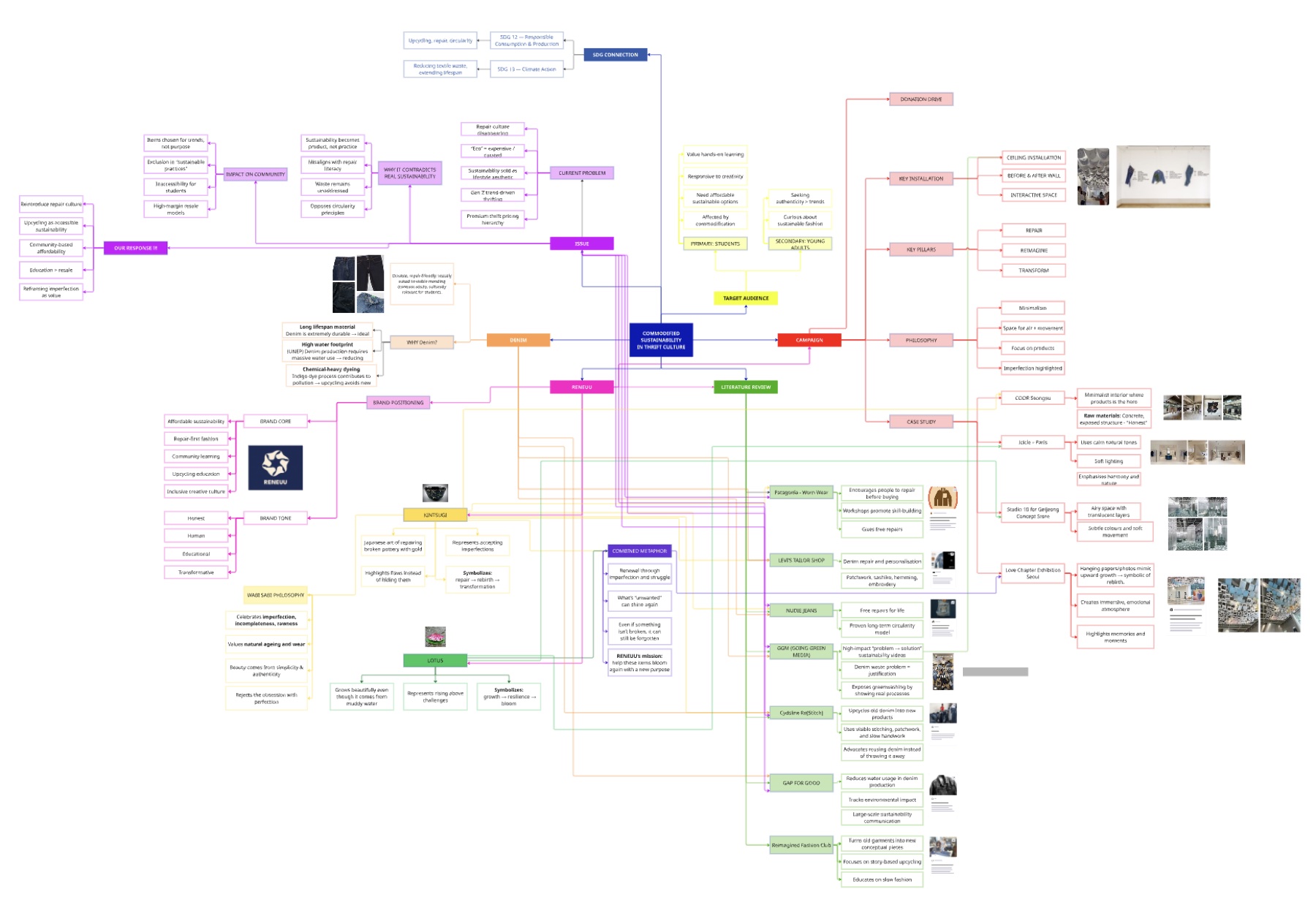
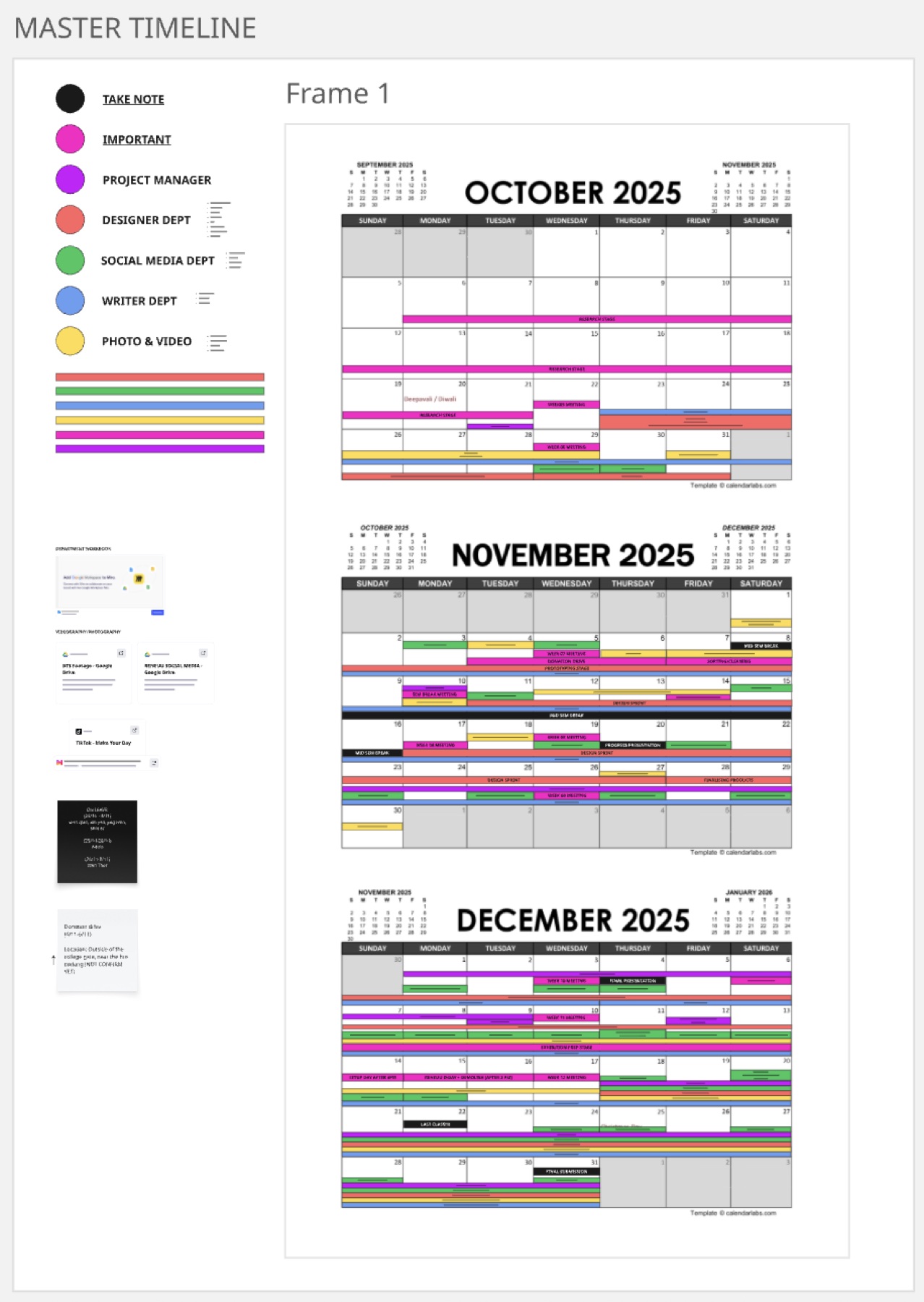
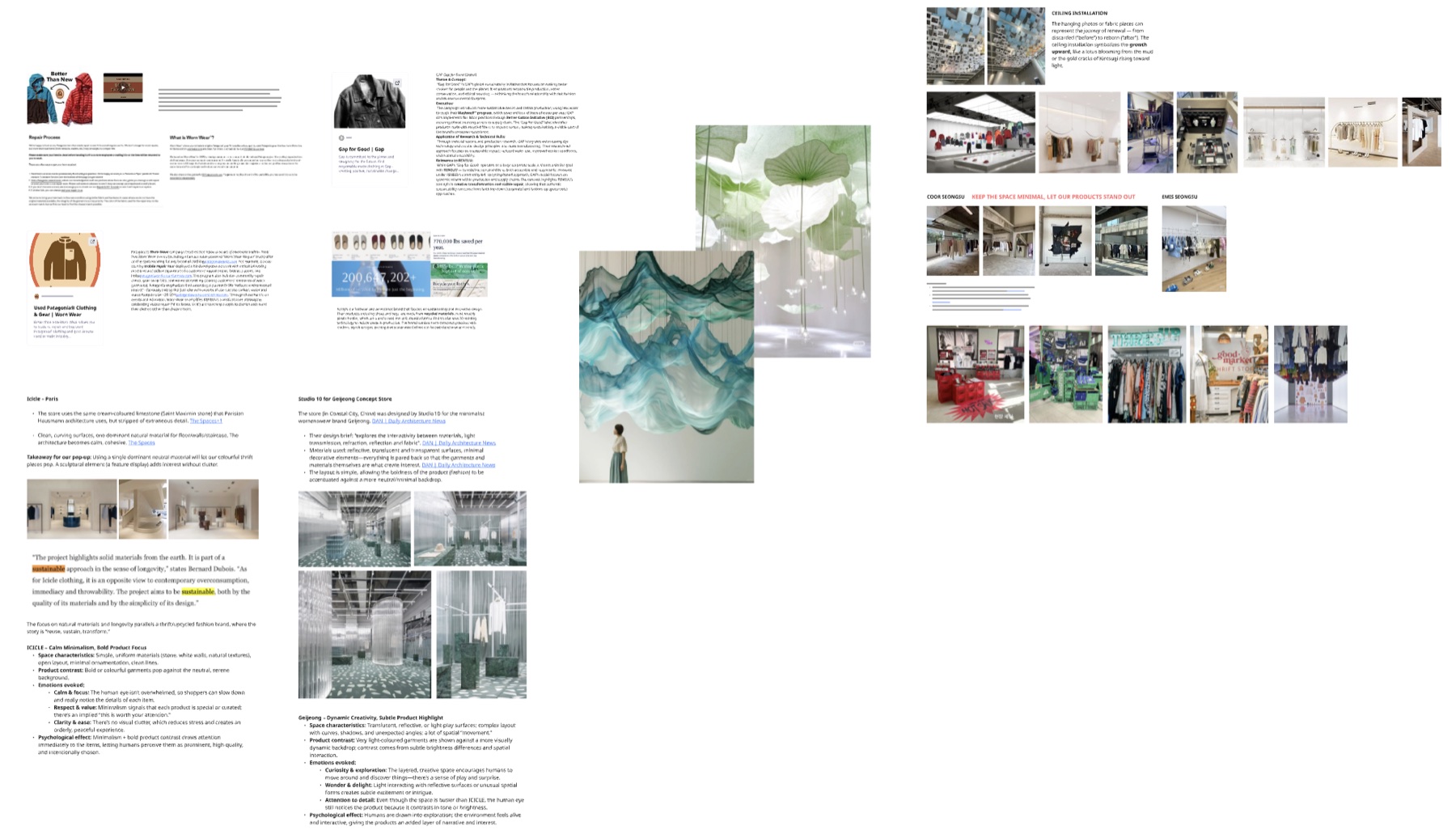
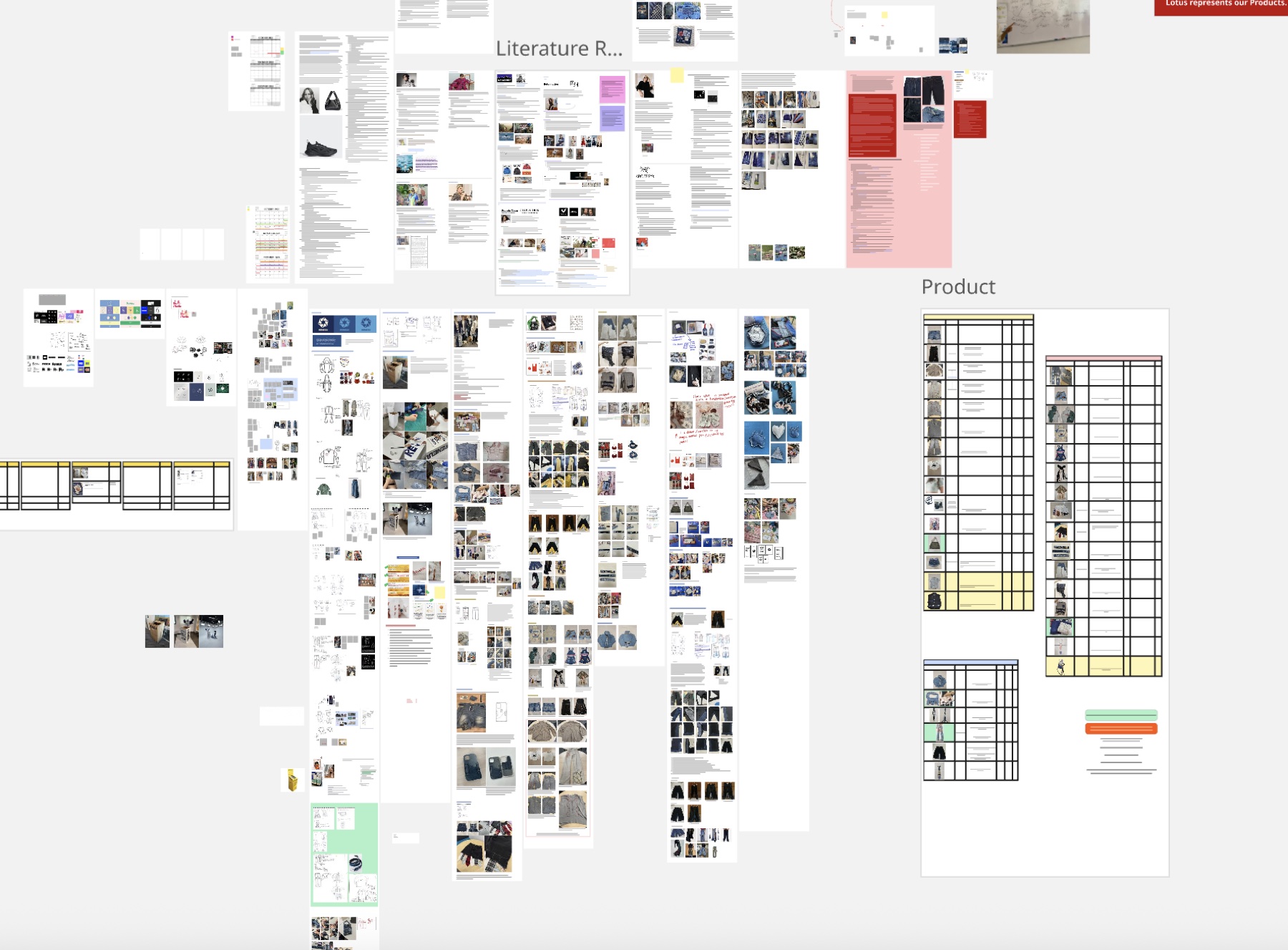
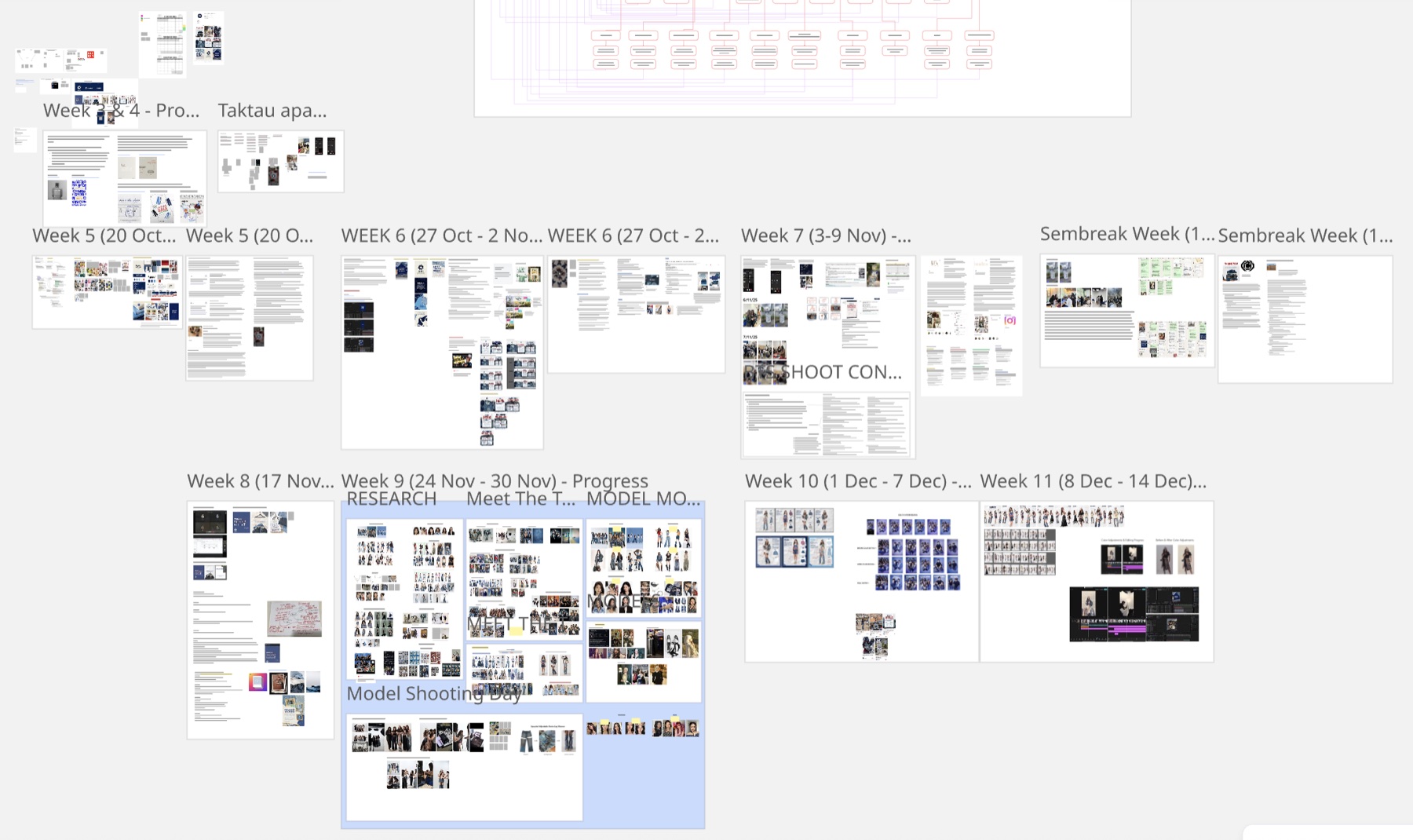
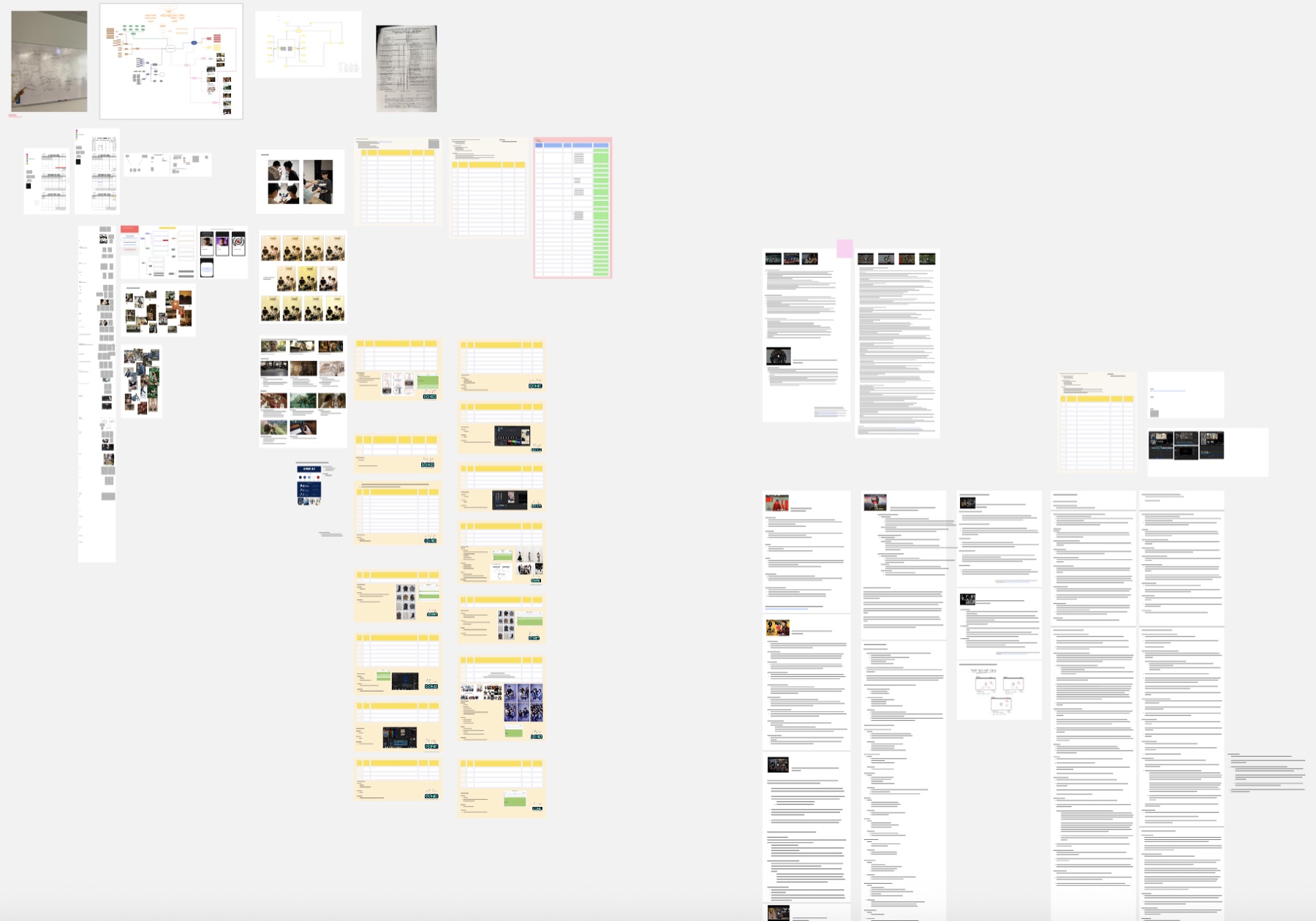
Shared Miro boards tracked responsibilities, visual research, timelines, budgets, spatial references, and decisions. The concepts emerged through group discussion; Willion and I then resolved how they connected and made the final calls required to keep the project coherent.
04 — From donation to product
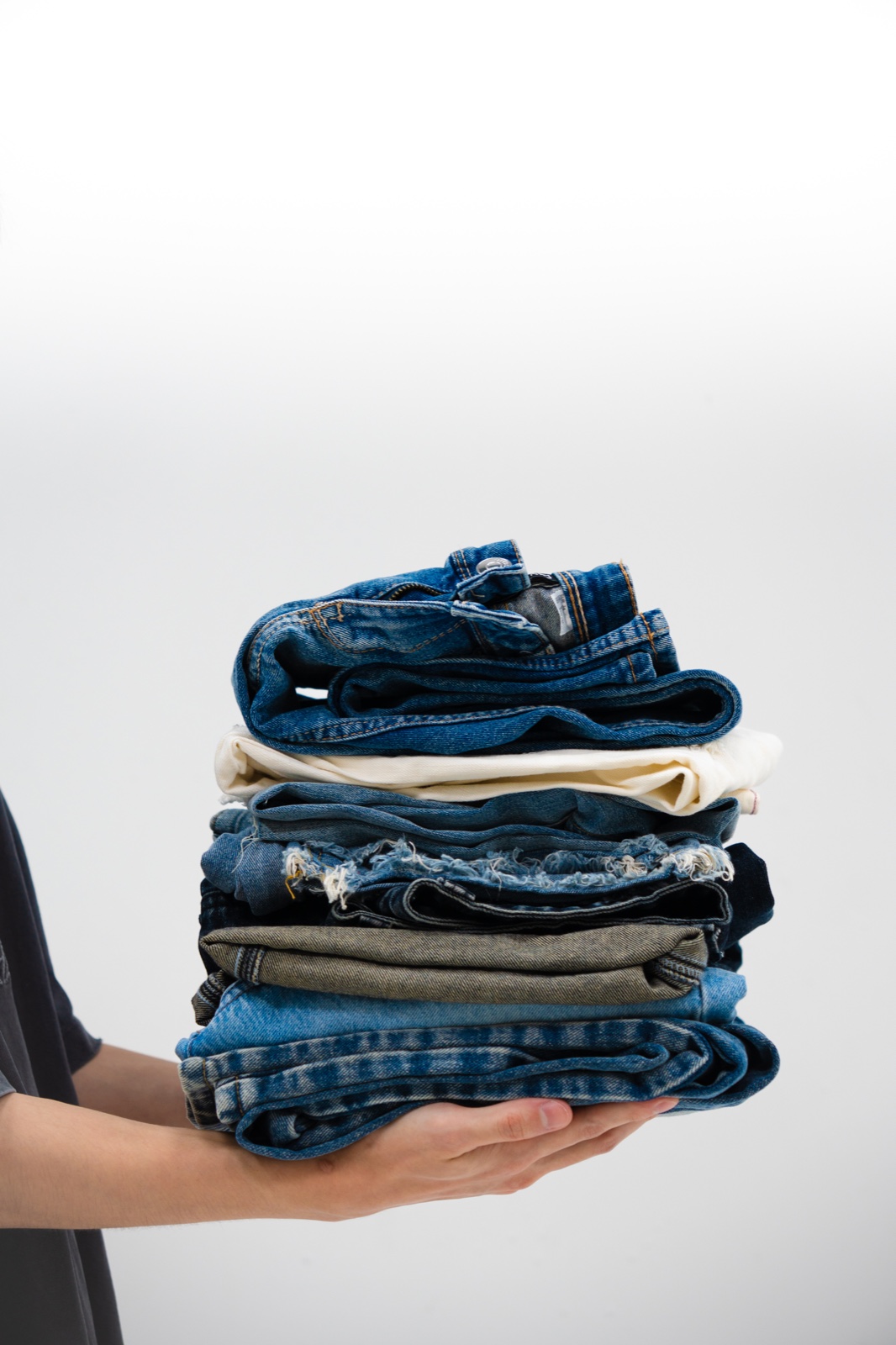
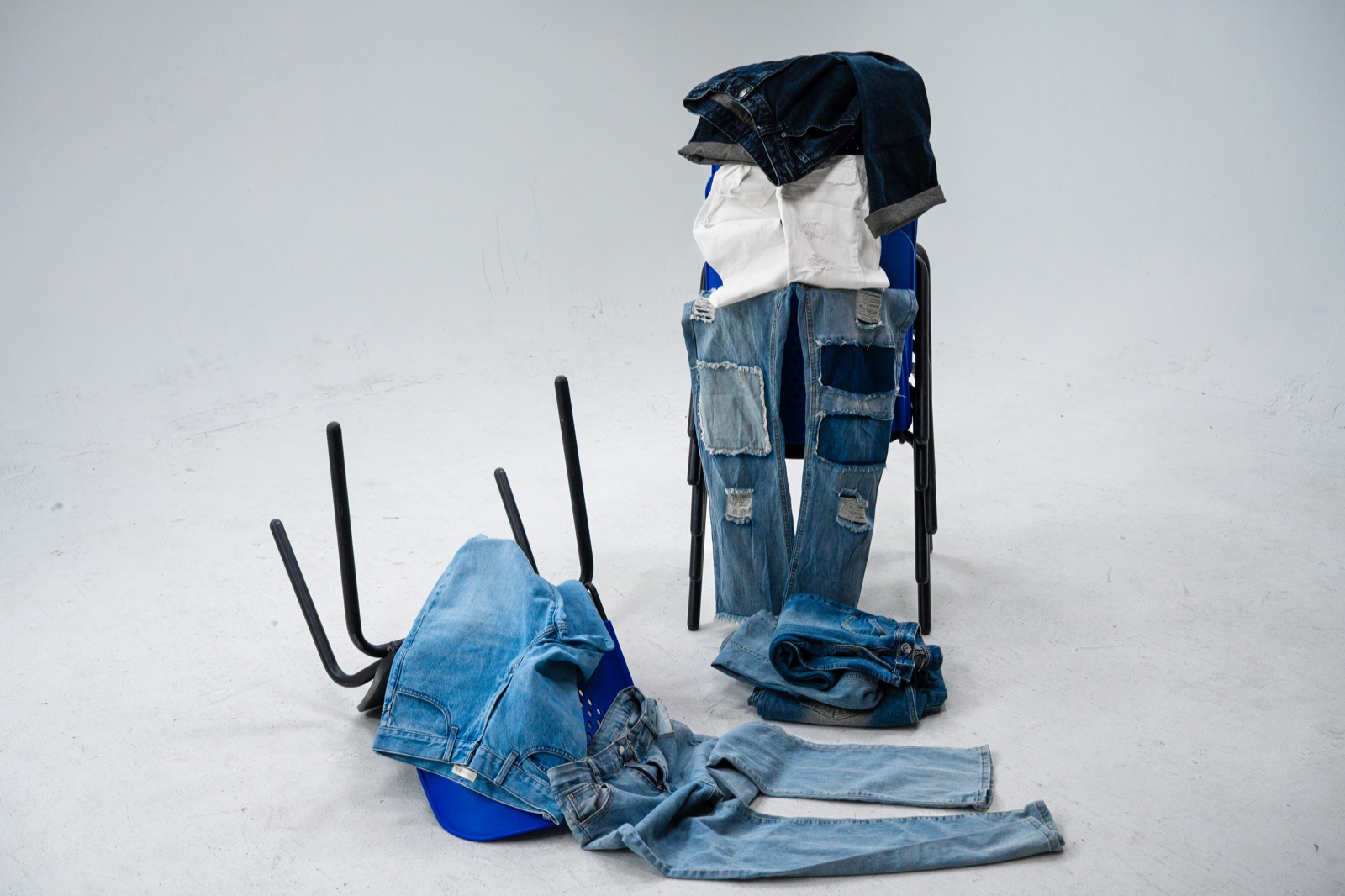
A three-day “Dump Your Ex… Jeans” drive invited the community to donate unwanted clothing. After sorting, washing, and drying, the garments became material for the Design Department to repair, reconstruct, and reimagine.
Approximately 20 products were proposed. The designers ultimately completed almost 40 fashion and functional pieces—nearly doubling the original target and turning the campaign’s promise of renewal into something visitors could wear and own.
Visit @reneuu.co ↗05 — Campaign communication
Photo & Video documented garments, production, campaign activity, and the before-and-after journey of each piece. Social Media translated that material into promotional and educational content, giving RENEUU a consistent presence beyond the exhibition.
A dedicated model shoot presented the outcomes as a cohesive fashion line rather than isolated student experiments. Rami Mir joined the production as an external model.
External model: Rami Mir · @ramiiii_0.0_
06 — Spatial experience
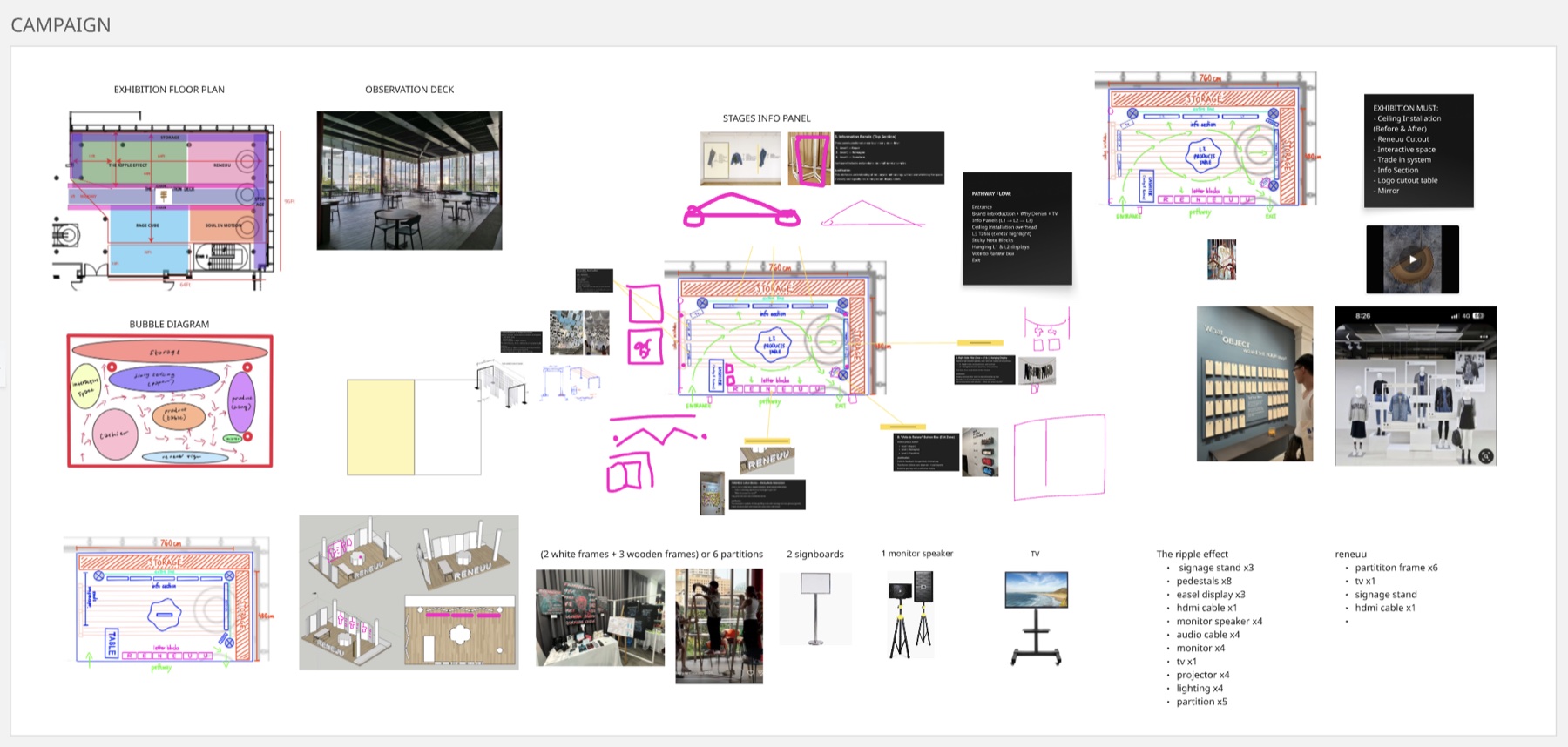
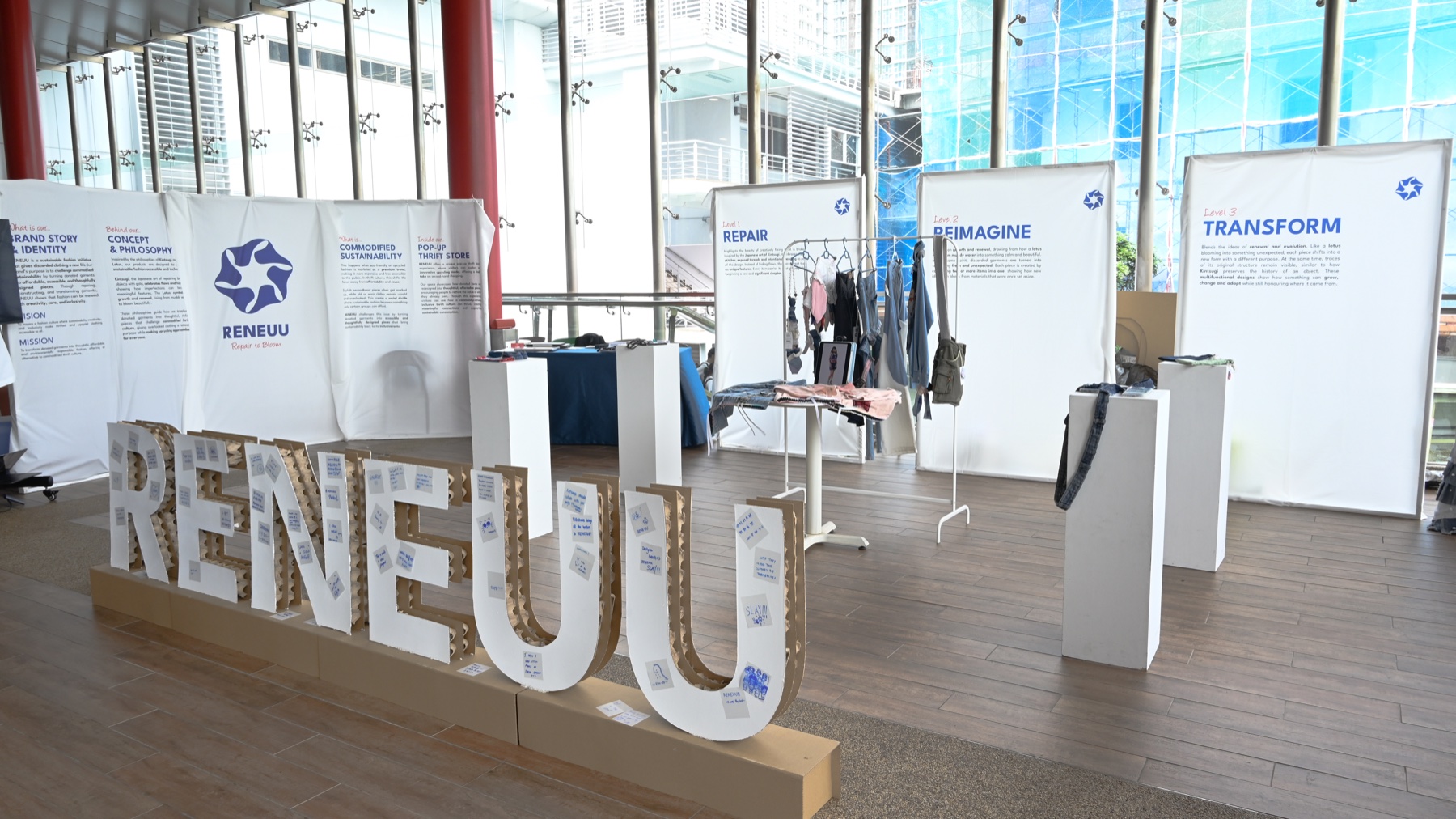
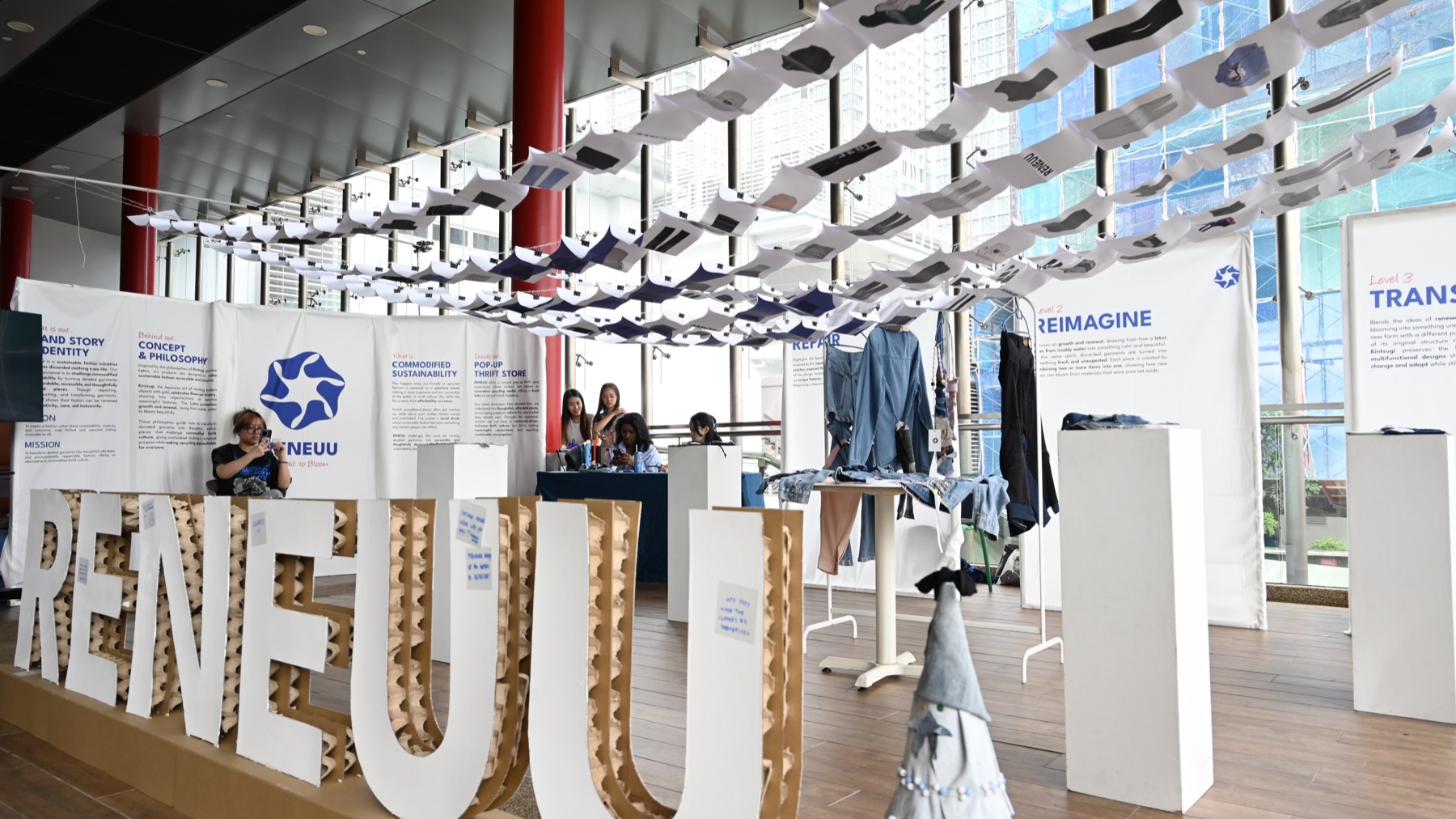
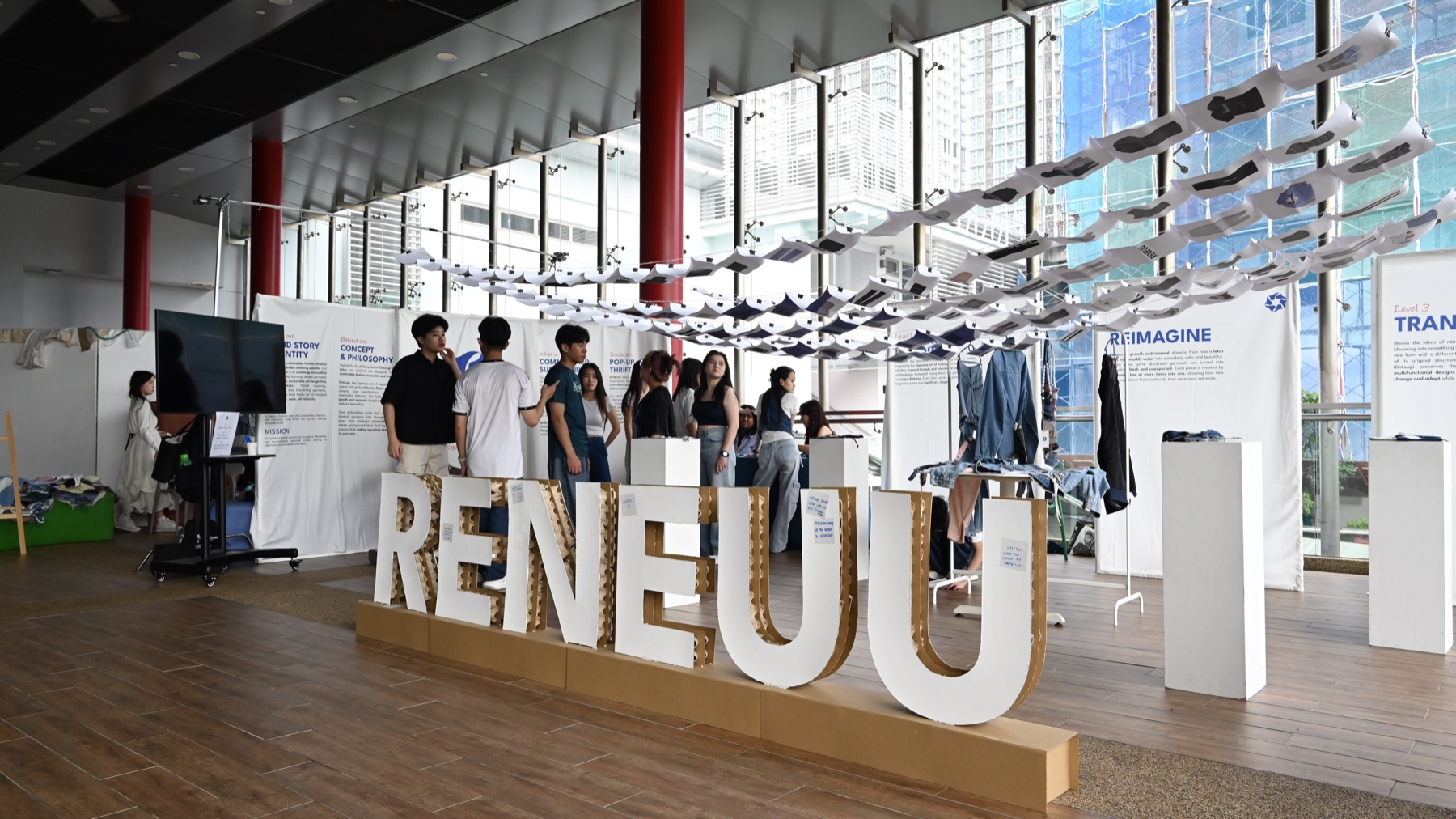
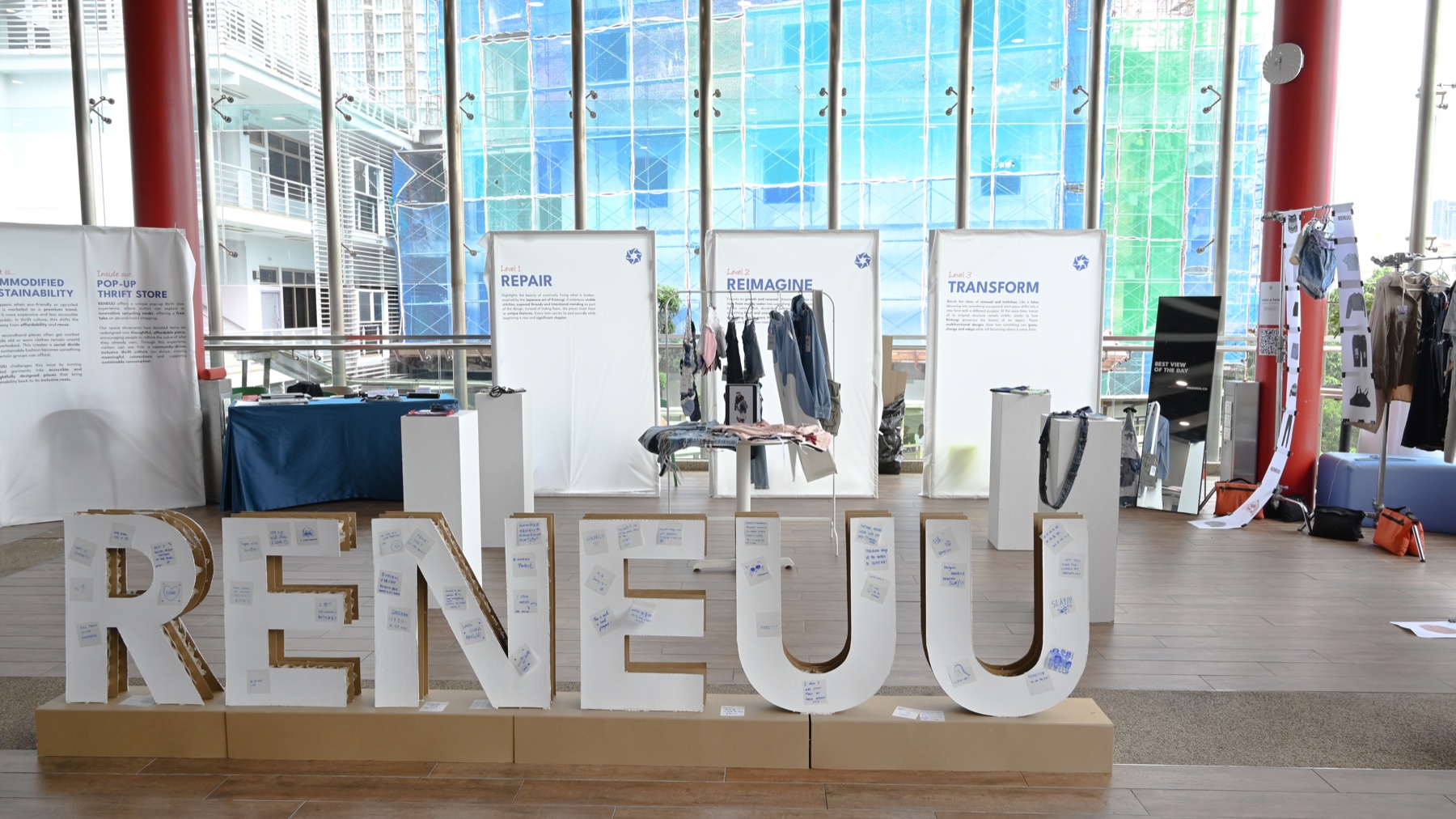
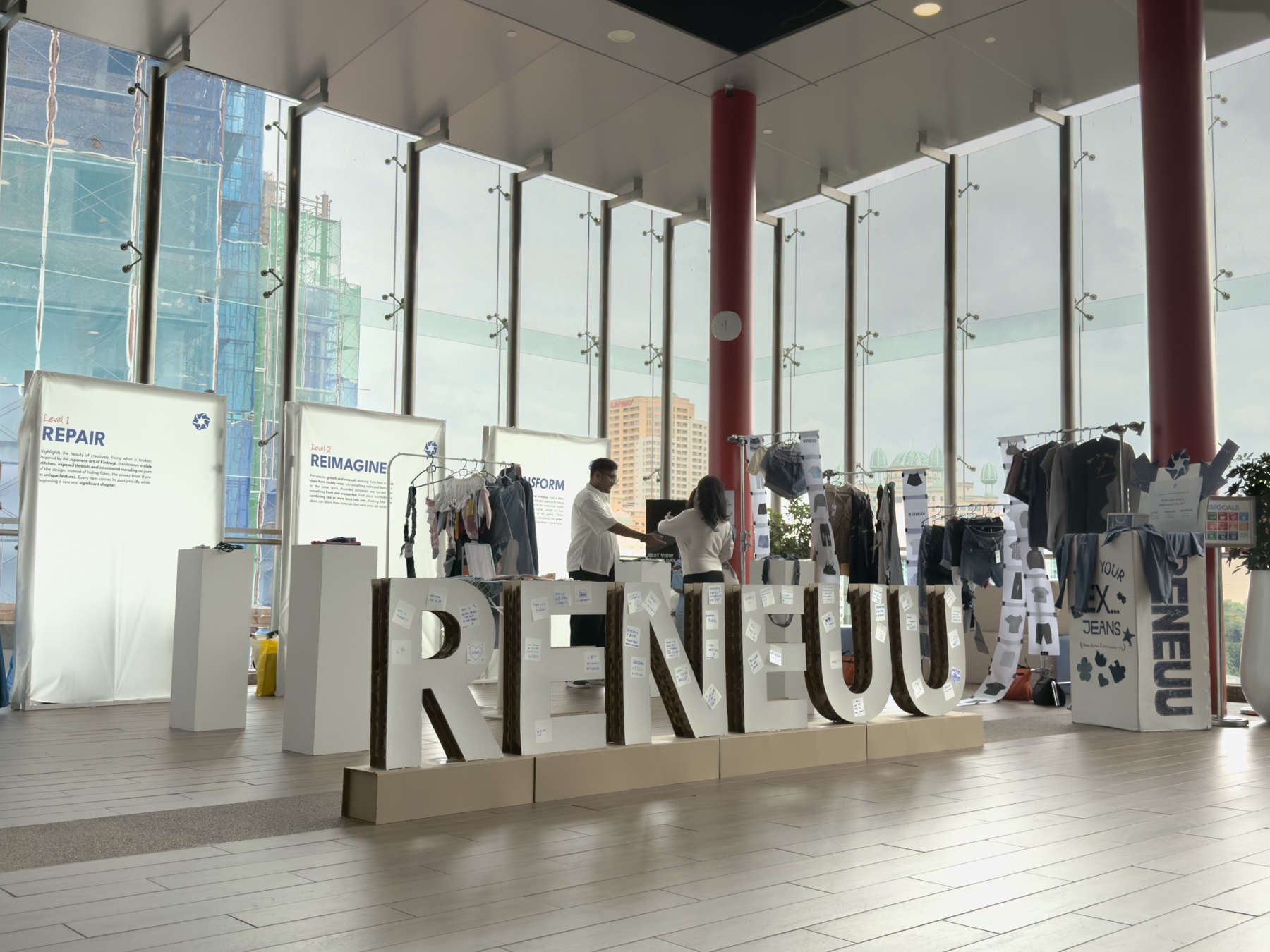
Willion and I independently led all exhibition planning, from early sketches, bubble diagrams, and floor plans to 3D visualisation, sourcing, fabrication decisions, setup, and dismantling. The departments supplied their respective content; turning it into one physical visitor journey was our responsibility.
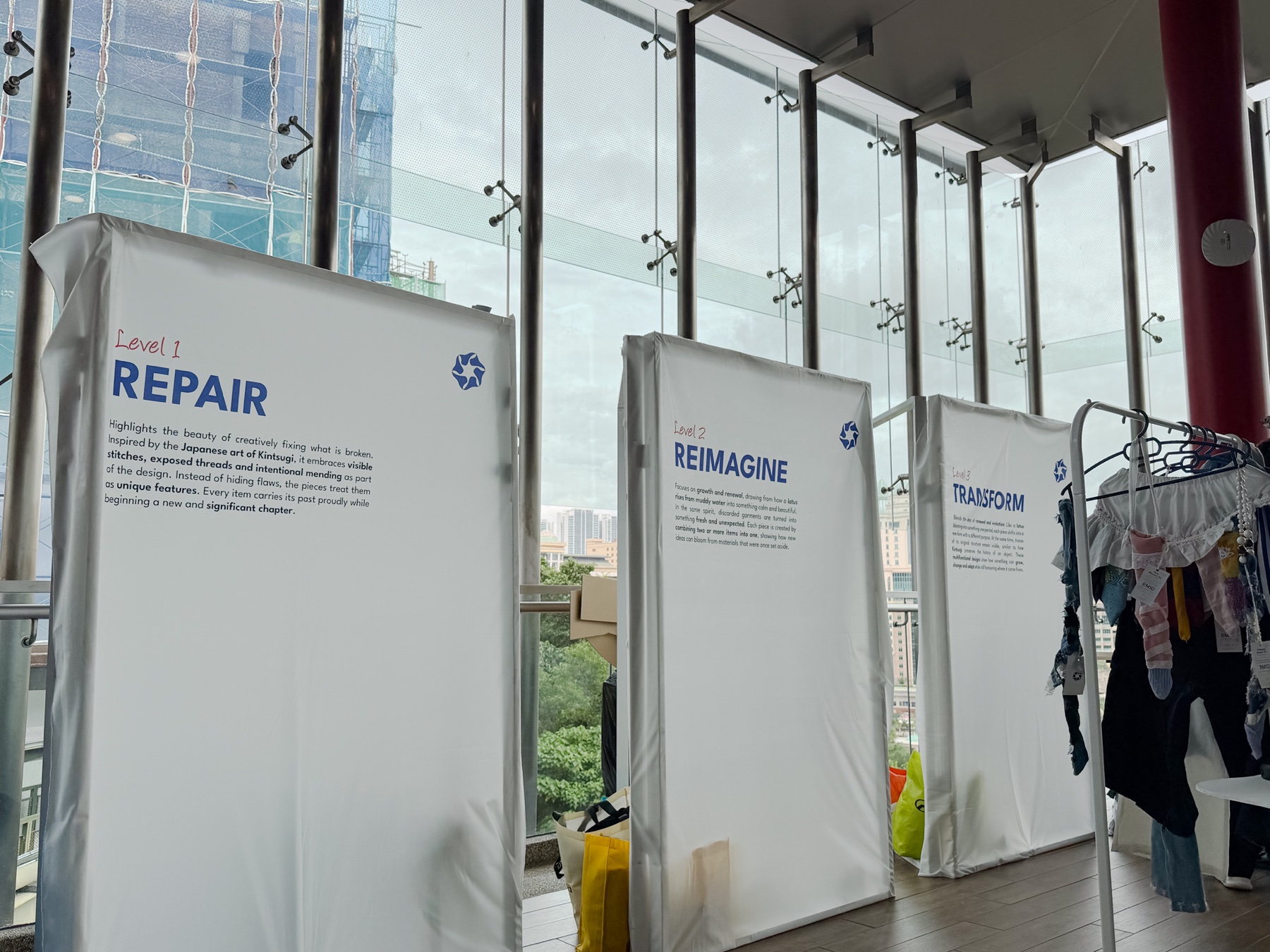
We prioritised reused, donated, borrowed, and leftover materials. Cardboard RENEUU letters were reinforced with free egg trays, a logo-shaped tabletop transformed an existing table, and printed cloths brought information into the textile language of the space. Before-and-after photographs formed a suspended focal point, while a mirror moment, digital booklet, feedback notes, and voting activity made the store participatory.
07 — Build & outcome
The completed space allowed visitors to browse, handle, try on, and purchase the upcycled pieces. Materials were reused wherever possible, and elements that changed because of practical or safety constraints were repurposed rather than discarded.
The team delivered the exhibition within an approximately RM300 target from a lean RM304 collective budget. Product sales reached RM196, and the professional presentation led some visitors to ask whether RENEUU was an established brand rather than a student project.
Alistair Ng · Willion Yap
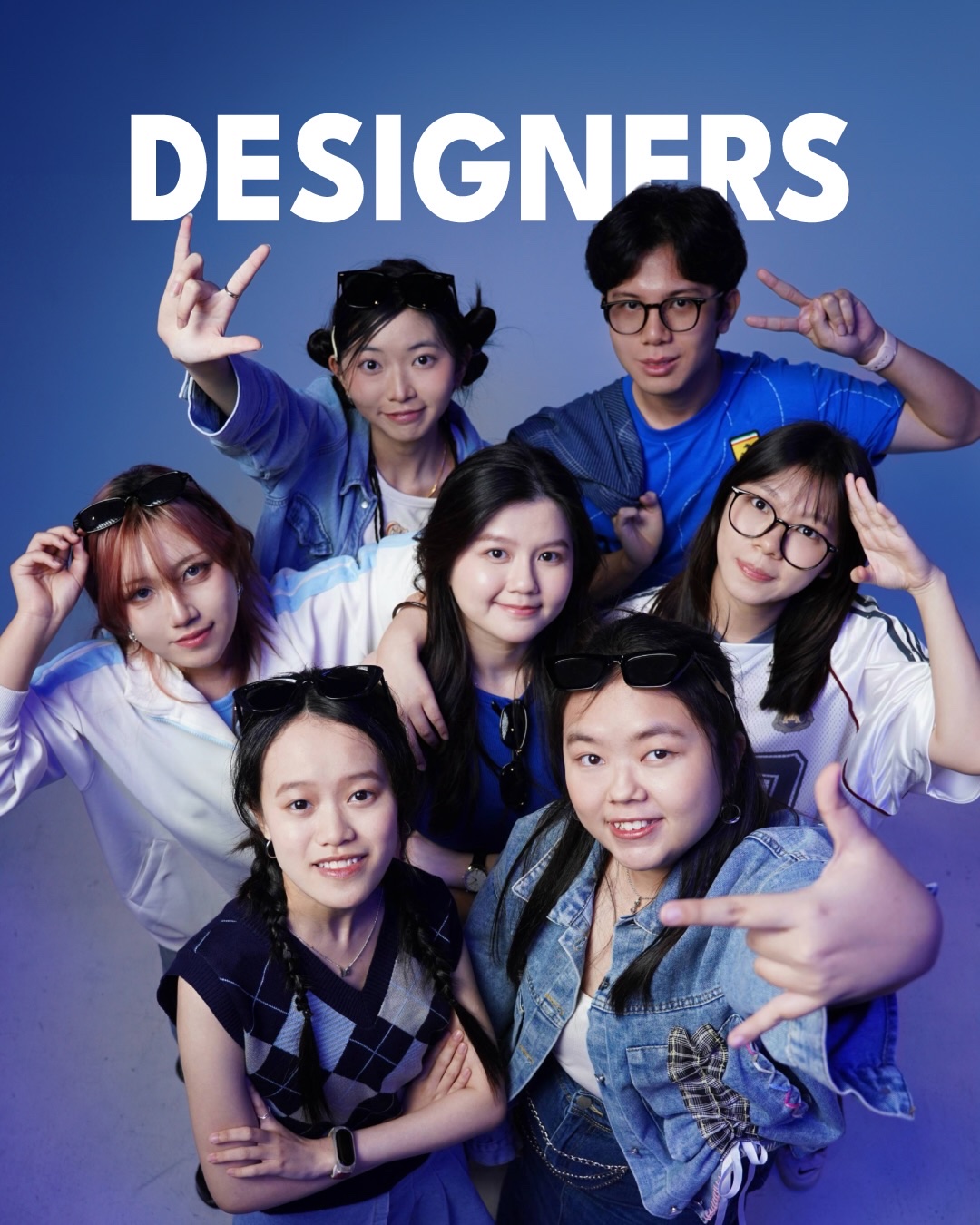
Jing Wen · Wen Qian · Xin Yen · Kah Yi (Jia) · Nikko Chai · Hui Xin · Shan Yong
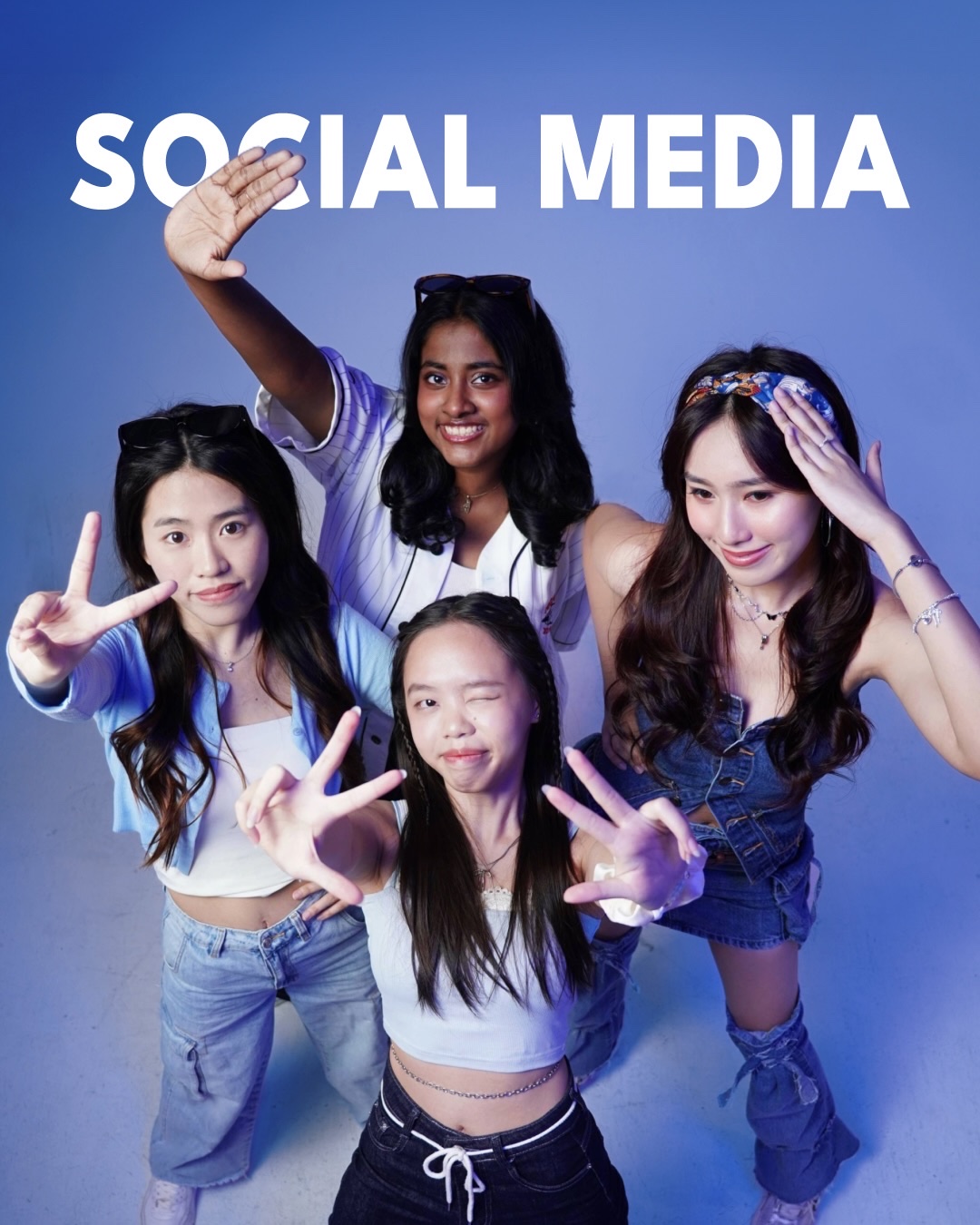
Angilica Chalean · Adele Lim · Tammy Chong · Shin Er
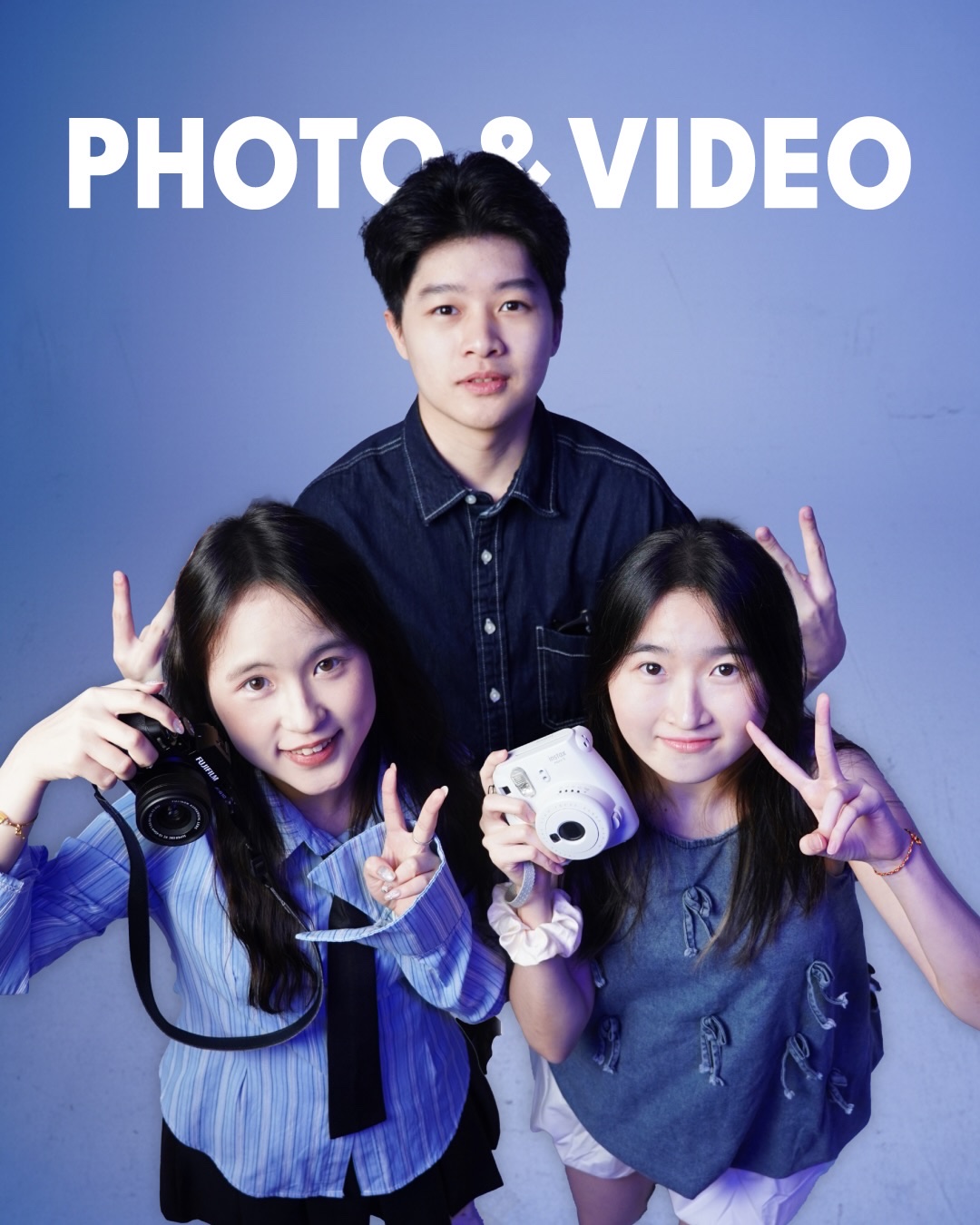
Jing Xian · WenZhuo · Zhi Qi
08 — The team
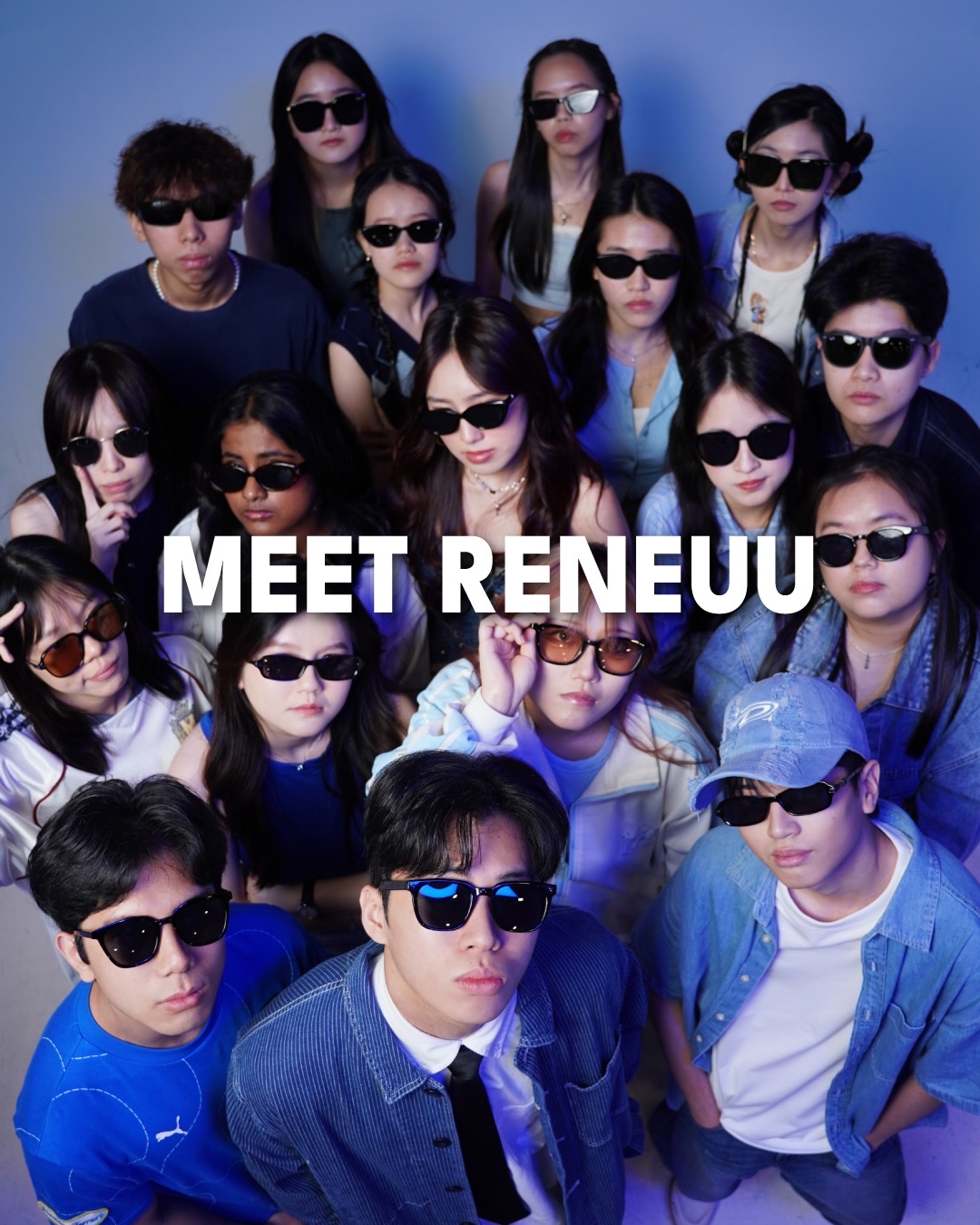
RENEUU depended on specialist teams working toward one shared direction. Designers transformed the donated material; Social Media shaped the campaign’s public voice; Photo & Video organised shoots and produced the final documentary; Project Managers connected every workstream and delivered the exhibition.
09 — Final documentary
The documentary closes the project by tracing RENEUU from its research and donation drive through garment transformation, campaign production, exhibition construction, and the final public experience.
Alistair Ng
alistair.ngyc@gmail.com
.svg)